Executive summary
Industrial water reuse can reduce freshwater demand when a treatment train is matched to both the source water and the intended reuse. This paper outlines a practical method for defining reuse requirements, characterizing feed variability and screening appropriate separation processes.
Establish the reuse objective
Begin with the point of reuse rather than a generic water-quality target. Cooling systems, cleaning operations and process-contact uses may require different limits for suspended solids, dissolved salts, organics and biological quality. Confirm these requirements with the operating team and identify the expected flow and availability profile.
Characterize the feed and select treatment stages
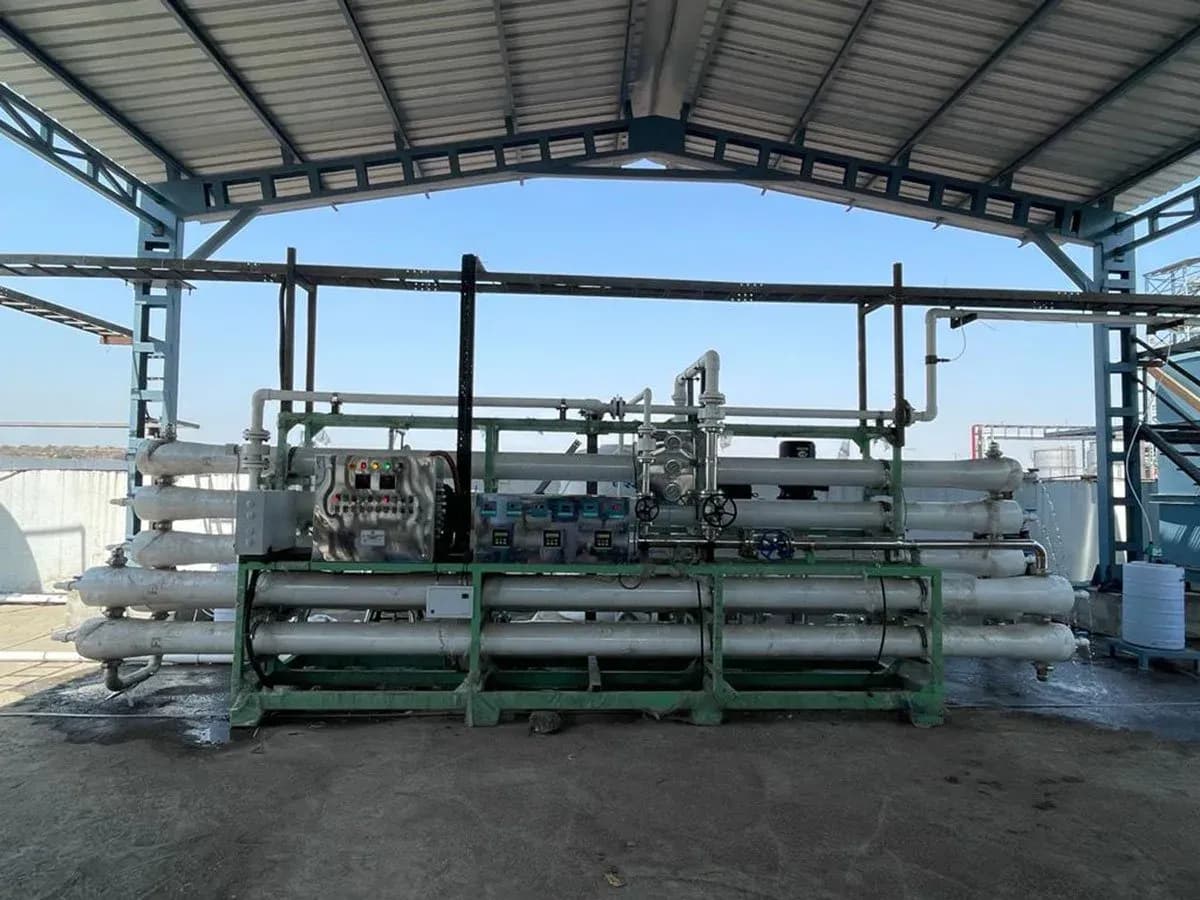
Representative sampling should cover normal operation and meaningful process variation. Analyze suspended and colloidal solids, hardness, alkalinity, silica, dissolved organics and other stream-specific constituents. Depending on the results, pretreatment may include screening, clarification or microfiltration and ultrafiltration, followed by nanofiltration or reverse osmosis where dissolved constituents need to be reduced.
Include recovery and residual streams in the design
Higher water recovery increases the concentration of retained constituents in the reject. Scaling, fouling and concentrate disposition therefore influence the feasible operating window. Evaluate permeate quality, recovery, cleaning frequency and residual handling as one connected process basis.
Conclusion
A staged assessment can identify the information needed for pilot testing and reduce uncertainty before detailed engineering. Pilot operation on representative feed provides evidence for stable flux, water quality, recovery and cleaning requirements under realistic conditions.